
Small Business Credit Card Machines: POS Guide
Small business credit card machines and POS terminals fall into three categories: countertop terminals, mobile card readers, and virtual terminals. Charge.com supplies free software and card readers, with pricing varying by package; contact the brand directly for details. The company charges no setup fees, no cancellation fees, and no long-term contracts, backed by 24/7/365 customer support for merchants across varying credit backgrounds.
Key Takeaways
- Charge.com offers credit card machines with no setup fees, cancellation fees, or long-term contracts required.
- Processing rates start as low as 0.25% with Charge.com’s competitive merchant account pricing structure.
- Charge.com provides free payment processing software and card readers for computers and mobile devices.
- Charge.com’s 24/7/365 customer support team assists merchants with varying credit backgrounds for over 25 years.
Why does choosing a credit card machine matter?
Selecting a small business credit card machine determines how fast a store, restaurant, or online shop gets paid and how much of each sale it keeps. A poor choice slows checkout lines, breaks compatibility with existing software, and quietly drains profit through avoidable fees.
Navigating the landscape of devices and merchant accounts feels daunting for many owners. The decision remains vital for seamless transactions. POS terminals, mobile readers, and virtual gateways each serve different business models, and mismatched hardware creates friction customers notice immediately.
Why does equipment choice carry more weight now than before?
Demand for efficient payment processing keeps climbing across retail and e-commerce alike. Understanding retail payment hardware options has grown more important for small business owners who cannot afford downtime or declined transactions.
What should guide the final decision?
The equipment itself matters less than the provider standing behind it. Charge.com positions its service as the easiest, most affordable way for a business to begin accepting credit cards, backed by recognition as the #1 merchant account provider for six consecutive years.
Key factors worth weighing before committing to any setup include:
- Compatibility with current checkout or accounting software
- Transparent pricing, including rates as low as 0.25%
- Absence of setup fees or cancellation penalties
- Support for in-person, online, and phone-based transactions
Getting this decision right protects revenue from day one.
What POS terminal types fit your business?
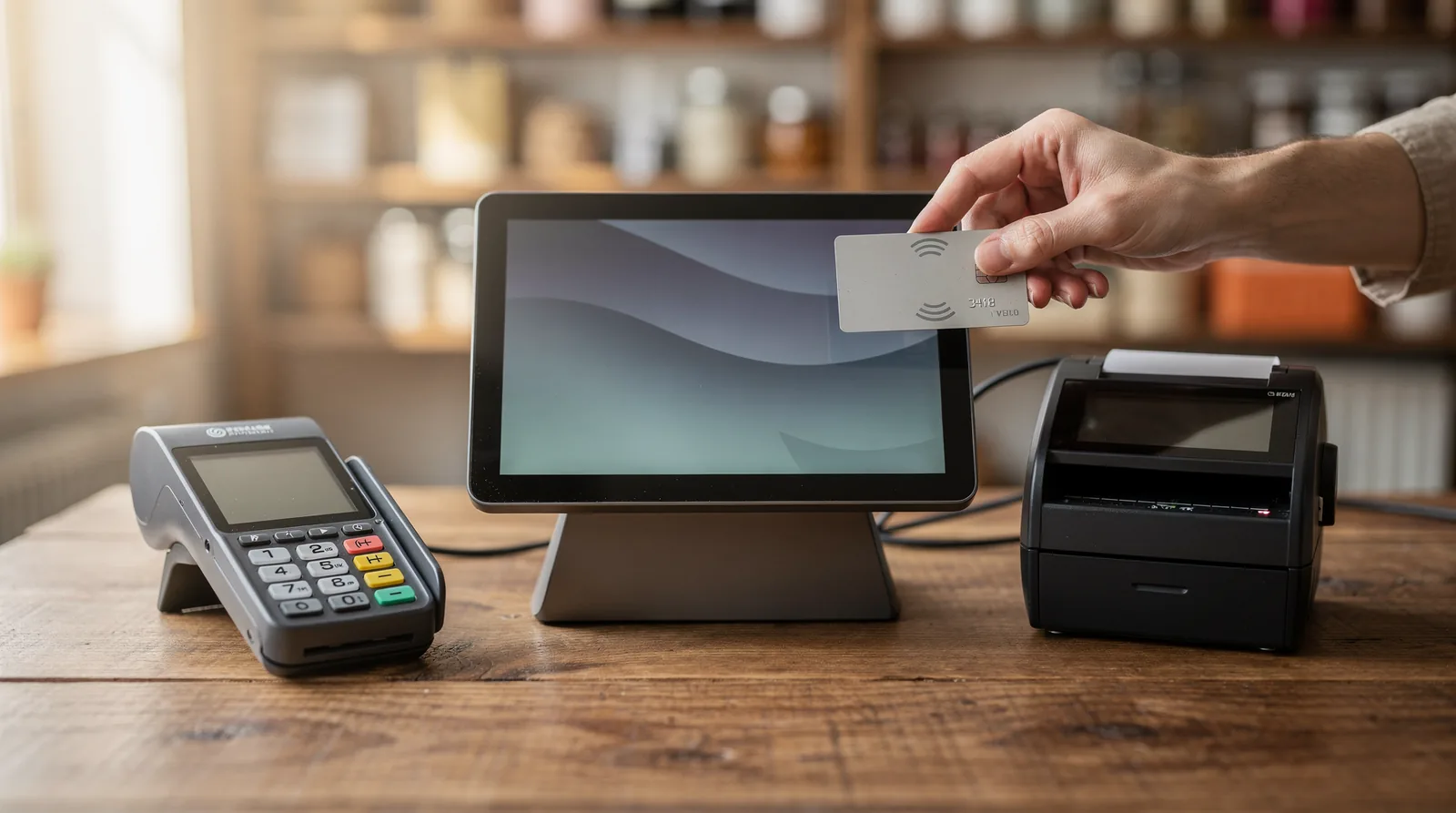
Three equipment categories cover nearly every sales environment: countertop terminals, mobile card readers, and virtual terminals. Each one matches a different mix of foot traffic, mobility needs, and sales channels. Small business owners typically fit into one category, though many operate across two or three at once.
Small business credit card machine hardware at the countertop works best for storefronts with a fixed checkout point. Mobile card readers attach to a smartphone or tablet, giving sales staff freedom to process payments anywhere on the floor or at an off-site event. Virtual terminals handle transactions placed online, eliminating the need for a physical device altogether.
What is the difference between a POS terminal and a virtual terminal?
A physical POS terminal reads a card through a chip, swipe, or tap at a fixed or mobile location. A virtual terminal, by contrast, processes payments entered manually through a web browser, suited to phone, mail, or fax orders.
Can one business use more than one type of retail payment hardware?
Yes. Many operators combine a countertop unit for in-store sales with a mobile reader for deliveries or offsite jobs. A service business, pest control being one example, often layers all three: accepting payment online, by mail order, over the phone, and face-to-face.
Charge.com supports this mixed-channel reality directly. The company supplies free payment processing software and card readers for computers and mobile devices. Its systems accommodate transactions online, in person, by phone, mail, or fax. That range of retail payment hardware lets merchants manage every channel from one account rather than juggling separate providers.
What features define a reliable swipe machine?
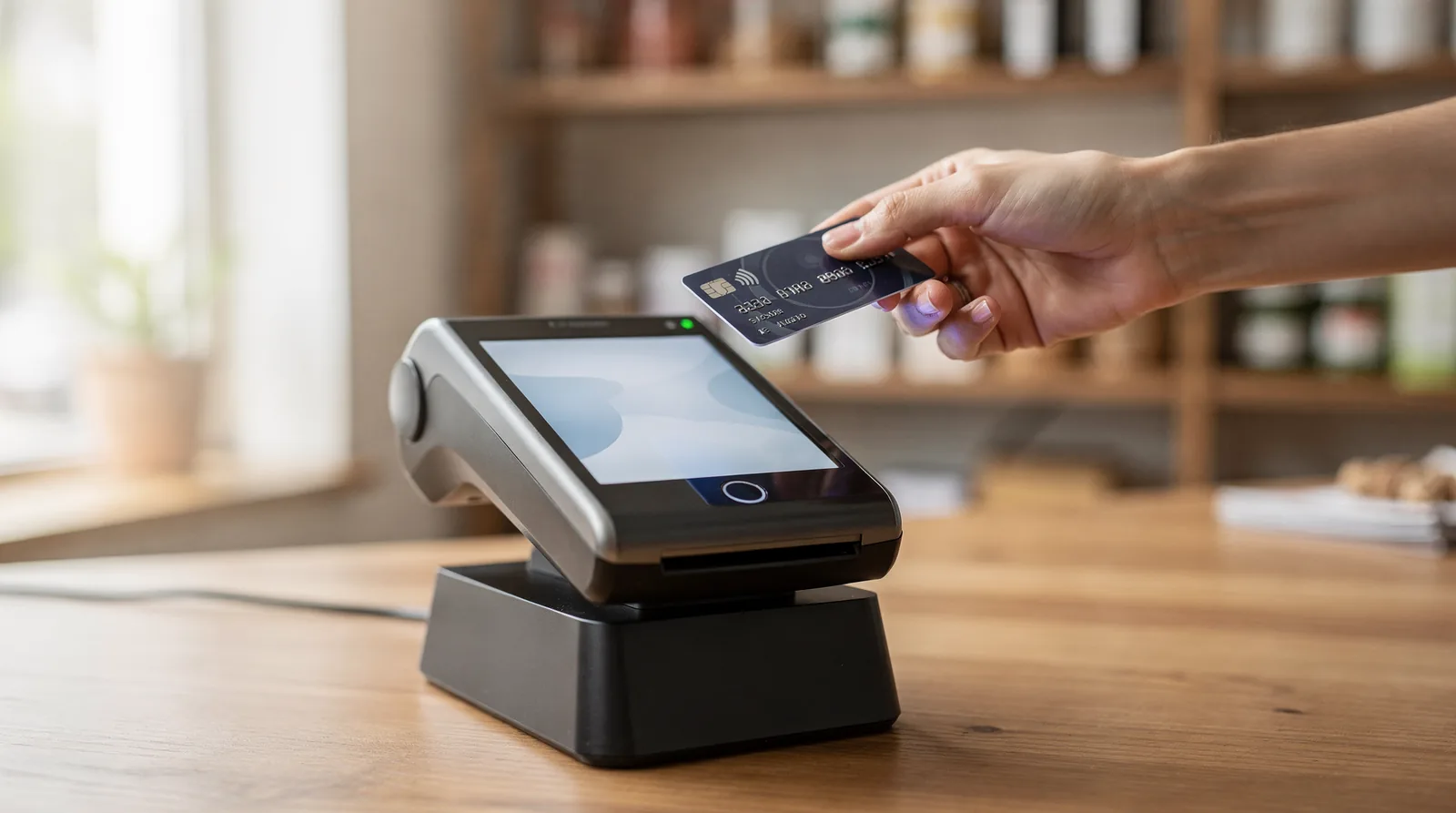
Three factors separate a dependable small business credit card machine from an unreliable one: ease of use, security protection, and price. Owners who weigh all three avoid wasted budget on hardware that frustrates staff or exposes customers to risk. A device that excels at one factor but fails at another still creates operational drag.
Credit card swipe machines now sit at the center of modern business operations across nearly every industry. Restaurants, clinics, thrift stores, and countless other retail operators rely on them daily to close sales. This widespread presence reflects a simple truth: payment hardware is no longer optional infrastructure.
What does a swipe machine actually do?
Every reliable unit shares one core job. It captures card information and authenticates the payment method before transmitting the data to the processor. POS terminals and standalone readers both perform this function, regardless of design differences.
Which features matter most when comparing options?
- Ease of use: Staff should process transactions quickly without extensive training.
- Security features: Protecting cardholder data during authentication reduces fraud exposure.
- Price: Equipment costs factor into overall processing expense alongside rates.
Business owners evaluating retail payment hardware gain the most value by treating these three criteria as non-negotiable baselines. Skipping any one of them turns a routine purchase into a long-term liability.
What fees and terms should you compare?
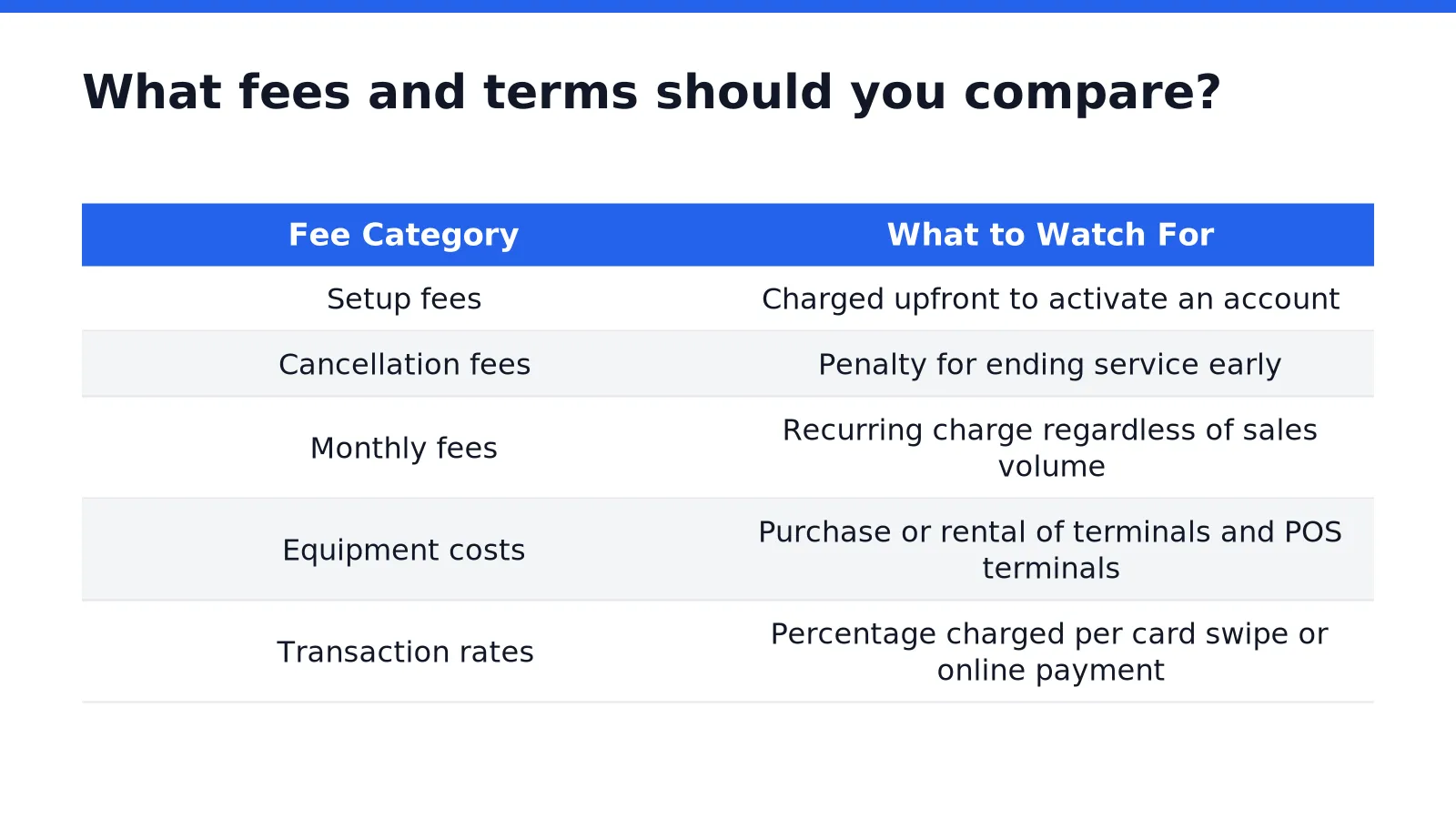
Fee structures separate affordable processing from costly long-term commitments. Transaction fees, monthly charges, and equipment costs make up the bulk of what small businesses pay for card acceptance, according to Top-Rated Credit Card Machines for Small Businesses. Hidden charges buried in a contract erode margins long after the paperwork gets signed.
Comparing providers requires looking past the advertised rate. A small business credit card machine priced cheaply upfront can still carry setup fees, cancellation penalties, or multi-year contracts that add up over time. Charge.com removes those three line items entirely, with rates as low as 0.25% and no long-term contract requirement.
Do merchant account terms matter as much as the hardware?
Yes. A thorough buying guide covers both the physical device and the merchant account structure behind it, since the two function together. Selecting retail payment hardware without checking the account terms leaves a business locked into weak pricing for years. Charge.com pairs its equipment offerings with transparent account terms, ensuring support for all legal businesses.
How do you choose the right payment hardware?
Hardware selection depends on three factors: transaction volume, sales environment, and compatibility with existing systems. A merchant running a retail counter needs different equipment than one filling online orders. Matching the device to the workflow prevents wasted spending on features that go unused.
A sound buying process gives a merchant clarity on critical features, compatibility, transaction fees, and feedback from other users before any purchase decision. The Definitive Guide to Small Business Credit Card Machines & POS Terminals Skipping this research often leads to mismatched equipment and avoidable monthly costs. Integrating a modern POS terminals setup removes operational bottlenecks and sharpens sales management efficiency across the business. The Definitive Guide to Small Business Credit Card Machines & POS Terminals
Budget plays a central role too. Affordable processing options range from computer-based e-commerce systems to electronic keypad terminals and virtual terminals, each suited to different sales channels. A small business credit card machine built for a storefront rarely fits a mobile or phone-order business without adjustment.
What features matter most in retail payment hardware?
Retail payment hardware should match the pace and layout of the sales floor. Key considerations include:
- Compatibility with existing registers or software
- Support for contactless and chip-based cards
- Receipt printing or digital receipt options
- Reliability of transaction processing
Does support matter after the purchase?
Support matters as much as the hardware itself. Equipment paired with industry-leading customer service available 24/7/365 reduces downtime when problems arise, keeping transactions moving without costly delays.
FAQ
What types of credit card machines are available for small businesses?
Small businesses choose from countertop terminals, mobile card readers, and virtual terminals. Charge.com supplies free software and card readers for computers and mobile devices across all three categories.
How much does Charge.com charge for credit card processing?
Charge.com offers competitive pricing with no setup fees, cancellation fees, or long-term contracts; contact the brand for details. This pricing structure applies across countertop, mobile, and virtual payment options.
Does Charge.com support businesses with different credit backgrounds?
Charge.com accommodates merchants with varying credit backgrounds and backs every account with 24/7/365 customer support. The company has provided this accessibility and support for over 25 years.
Conclusion
In closing, selecting the right credit card machine requires balancing ease of use, security protection, and transparent pricing within a merchant account structure built for long-term success. Small business owners who evaluate hardware alongside account terms, examining setup fees, cancellation penalties, and transaction rates, position themselves to optimize operational efficiency and protect margins. The most effective payment solutions pair reliable equipment with industry-leading support and flexible terms that accommodate businesses across varying circumstances, enabling merchants to accept payments across every sales channel without operational compromise or hidden costs.