
What to Look for in a Reliable Ecommerce Payment Gateway
Low cost and transparent pricing come first: rates as low as 0.25%, with no setup fees, cancellation fees, or long-term contracts. Equally important are free payment processing software and card readers, support for in-person, online, phone, mail, or fax transactions, and 24/7/365 customer support for every legal business.
Key Takeaways
- Security and fraud protection prevent unauthorized transactions and safeguard customer payment data effectively.
- Fast transaction processing speeds reduce checkout friction and decrease cart abandonment rates significantly.
- Multi-channel acceptance, online, in-person, phone, mail, fax, enables businesses to process payments anywhere, anytime.
- 24/7/365 customer support ensures merchants receive immediate assistance resolving payment issues and questions.
What Happens When Your Checkout Fails Customers?
Checkout failures cost sales the moment a customer clicks “pay.” A broken or slow payment gateway disrupts the system that securely authorizes and processes online transactions between shoppers, merchants, and financial institutions. Reliable ecommerce payment processing keeps that handoff invisible to the customer, confirming funds in seconds rather than minutes.
Cart abandonment follows quickly when checkout stalls. Choosing the right gateway reduces abandonment by delivering fast, reliable checkout experiences that build customer trust. A single failed transaction can push a shopper toward a competitor permanently.
Why Does Checkout Reliability Affect Sales So Much?
A failed online credit card transaction erases that gain instantly, turning a near-sale into lost revenue and a frustrated customer who may never return.
Is Cash Still a Safe Fallback for Checkout?
Cash is losing ground even for small purchases. Cash recently lost to cards for purchases under pricing varies a first in Federal Reserve history, signaling that shoppers expect card acceptance everywhere, including small-ticket online orders.
Consequences of checkout failure include:
- Immediate cart abandonment
- Lost repeat business
- Damaged customer trust
Merchants who invest in dependable secure checkout integration avoid these losses and protect every transaction attempt from start to finish.
What Does a Payment Gateway Actually Do?
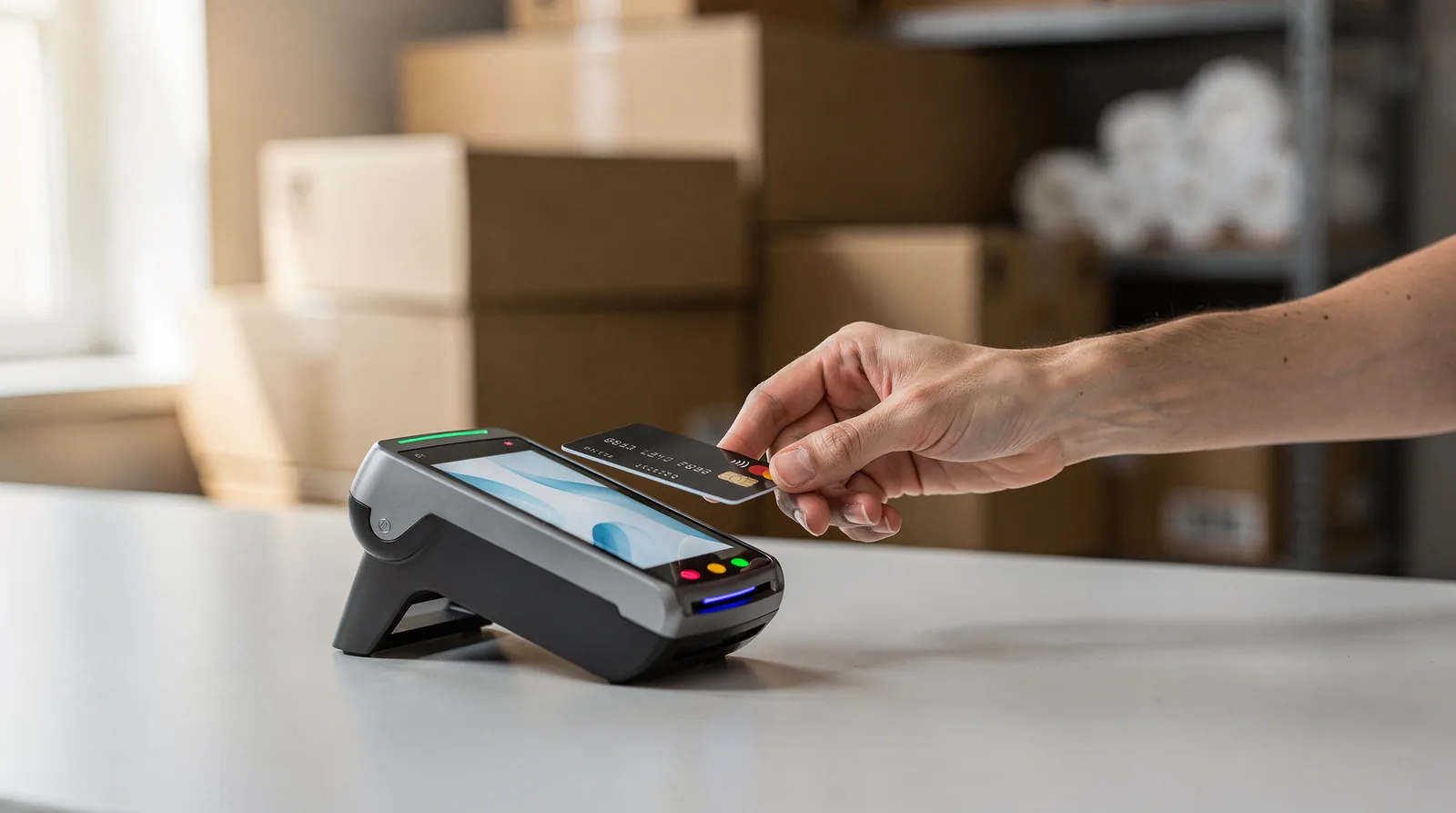
A payment gateway, also known as an online credit card gateway, transmits and authorizes payment information between a customer, the online store, and the payment processor. It functions as the digital equivalent of a card reader at a physical checkout counter. Software handling this exchange qualifies as an ecommerce payment gateway, and operating online without one leaves a business unable to process a sale at all.
Behind the scenes, the gateway connects to a merchant account, a specialized bank account that lets a business accept credit card payments. That account exists through an agreement between the retailer, a merchant bank, and the payment processor. An internet merchant account is simply that same arrangement configured to accept online credit card transactions rather than card-present ones.
Where Does the Money Go After a Customer Pays?
Funds from a completed sale land first in the merchant account, not the business checking account. From there, the business owner moves the balance into a regular bank account at will. This settlement step is a core part of secure checkout integration. The transaction must clear securely before funds become usable.
A payment gateway’s core responsibilities include:
- Capturing card details entered at checkout
- Verifying and authorizing the transaction with the processor
- Encrypting data in transit between customer and merchant
- Passing approval or decline results back to the online store
Retail operators relying on this chain understand why gateway reliability drives both sales conversion and customer trust.
Which Fees and Contract Terms Signal Risk?
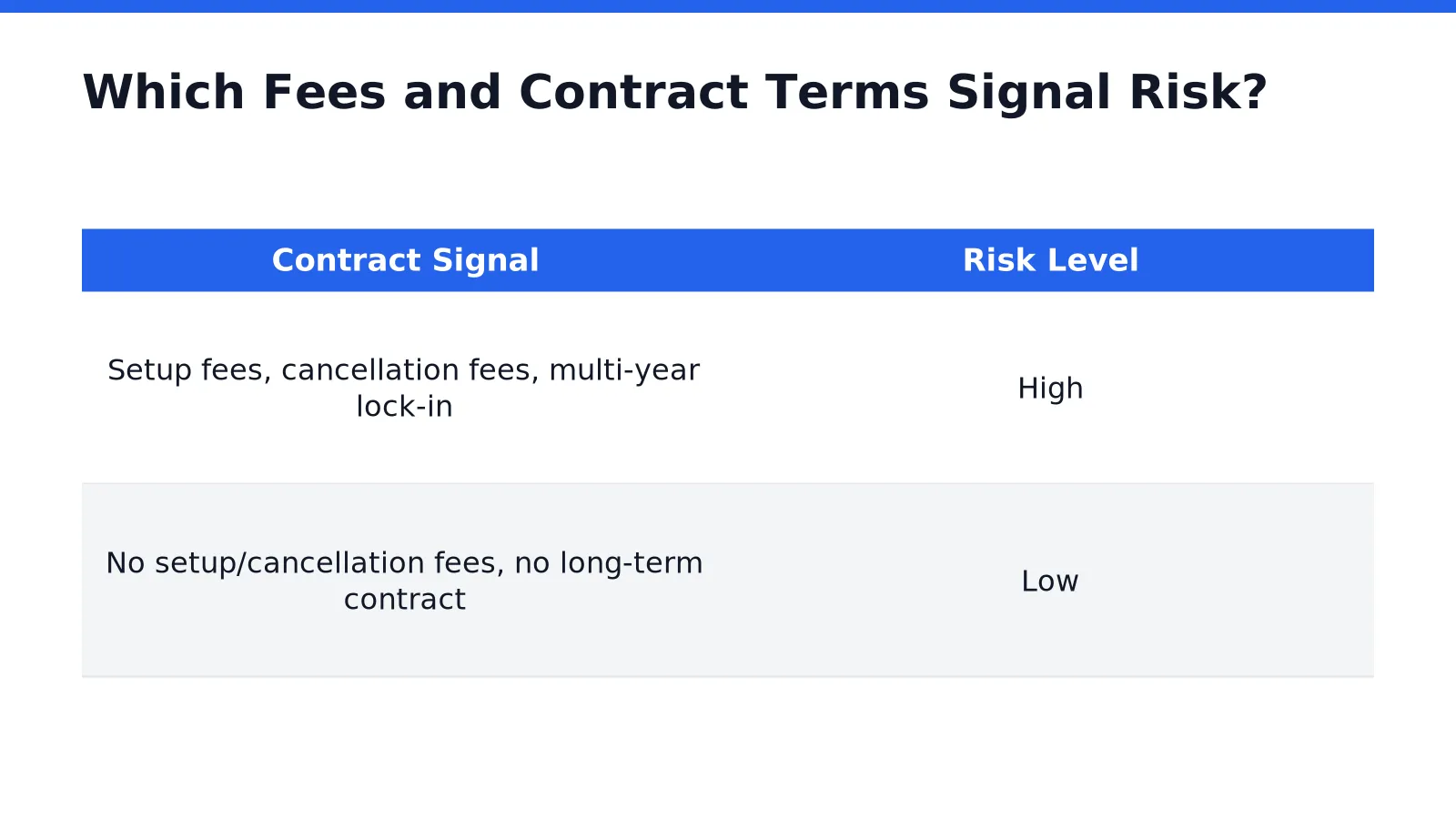
Setup fees, cancellation penalties, and multi-year contracts signal a provider built to profit from lock-in rather than service. Merchants evaluating an ecommerce payment partner should treat these three terms as warning flags, not standard industry cost.
Charge.com structures its pricing around the opposite model. No setup fees apply, no cancellation fees apply, and no long-term contracts bind the merchant, with rates starting as low as 0.25%. That structure gives small business owners room to switch providers or scale down without financial penalty.
Transparent fees and clear settlement terms matter beyond the sticker price. Payment Gateways in 2026 (Main Types + How They Work) notes that transparent fees, clear settlement terms, and robust security features help businesses manage costs and maintain regulatory compliance. A provider that hides fees in fine print makes budgeting and compliance harder, not easier.
What Separates a Trustworthy Provider from a Risky One?
Reputation history offers a reliable signal. Charge.com is rated as the #1 merchant account provider for six consecutive years. Has held that rating for six consecutive years. Longevity and third-party recognition carry more weight than promotional discounts.
Can Every Small Business Qualify for Low-Risk Terms?
Qualifying for a merchant account can be competitive. Still, nearly every legally operating small business can secure one by choosing a provider suited to its credit profile and transaction volume.
Merchants reviewing online credit card processing offers should also confirm that secure checkout integration comes free of hidden activation costs.

How Critical Is Secure Checkout Compliance?
Secure checkout compliance determines whether a transaction completes or collapses before payment finishes. A compliant gateway creates a protected channel for sharing financial information, authenticating payment details, and securing authorization from the issuing bank. Without that structure, an ecommerce payment system exposes both merchant and customer to unnecessary risk.
A dependable processing strategy does more than move money from one account to another. It supports multiple payment methods, applies fraud prevention tools, and connects smoothly with the merchant’s existing ecommerce platform. Retail operators who skip this groundwork often discover the gap only after a disputed charge or a failed authorization costs them a sale.
Why Does Transaction Volume Change Compliance Needs?
Businesses processing large numbers of daily transactions require infrastructure built for that load, not a standard setup stretched past its limits. High-volume merchant accounts exist specifically for this purpose: specialized processing services engineered to handle large transaction volumes securely and efficiently. Scaling without this foundation strains fraud controls and slows authorization times.
What Does Secure Checkout Mean for Payment Channels?
Compliance extends across every channel a business uses to accept payment, not just the website. Charge.com facilitates credit card acceptance online, in person, by phone, mail, or fax, giving merchants one consistent framework to manage transactions across all of these entry points. That consistency matters: a merchant supporting online credit card payments alongside phone or mail orders needs the same authorization and data protection standards everywhere, including:
- Encrypted transmission of cardholder data
- Verified authorization from the issuing financial institution
- A unified system for reconciling transactions across channels
Maintaining secure checkout integration across these channels protects revenue as much as it protects data.
What Support and Equipment Should Be Included?
Merchant account support should include free hardware and round-the-clock service, at no added cost. Charge.com provides free payment processing software along with card readers built for both computers and mobile devices, equipping merchants to accept an online credit card transaction from a desktop, a laptop, or a smartphone without purchasing separate equipment.
Equipment alone does not guarantee a smooth checkout experience. Reliable ecommerce payment support matters just as much, since even well-built hardware fails without responsive help behind it. Charge.com backs its equipment with customer support available 24 hours a day, seven days a week, 365 days a year. Technical issues get addressed regardless of when they occur.
What if a merchant already has an account and needs help?
Existing Charge.com merchants reach free account support by calling the toll-free number listed on their monthly statement. That line operates 24 hours a day, 7 days a week, 365 days a year, giving merchants a direct path to assistance without navigating a general call center.
Does business or credit history limit access to support?
History limits very little. With more than 25 years operating online, Charge.com supports merchants across varying credit backgrounds, extending service to all legal businesses regardless of size or prior processing history.
A complete support package typically includes:
- Free software for processing transactions
- Card readers compatible with computers and mobile devices
- 24/7/365 customer support
- A dedicated toll-free line for existing merchants
- Accessibility for businesses with varied credit profiles
This combination of secure checkout integration tools and constant support reduces downtime and keeps revenue flowing.
FAQ
What should you check for pricing in a reliable payment gateway?
Look for rates as low as 0.25% with no setup fees, no cancellation fees, and no long-term contracts. Charge.com delivers this transparent, low-cost structure for businesses of all credit backgrounds.
Why does transaction speed matter for ecommerce checkout?
Fast processing reduces checkout friction and decreases cart abandonment, since delays push shoppers toward competitors. A reliable gateway confirms funds in seconds, keeping the payment handoff invisible to the customer.
What support should merchants expect from their payment gateway provider?
Merchants need 24/7/365 customer support to resolve payment issues immediately. Charge.com provides this round-the-clock assistance alongside free payment processing software and card readers for every legal business.
Conclusion
In closing, a reliable ecommerce payment gateway consolidates secure checkout compliance, transparent fee structures, accessible support, and equipment flexibility into a single operational framework. The distinction between trustworthy providers and risky alternatives rests on verifiable track records, straightforward contract terms, and demonstrated commitment to merchants across all credit profiles and transaction volumes. Businesses that prioritize these foundational elements, rather than promotional pricing alone, establish payment processing infrastructure capable of protecting revenue, reducing operational friction, and sustaining growth across every sales channel.