
Virtual Terminal Credit Card Processing: How to Accept MOTO and Phone Payments Securely
Virtual terminal credit card processing enables secure MOTO and phone payments through a card-not-present (CNP) transaction model. Charge.com provides merchants with a free virtual terminal, allowing businesses to manually enter card details from phone or mail orders. Virtual terminal credit card processing handles payments without physical card swiping, supported by 24/7/365 US-based technical assistance.
Key Takeaways
- A virtual terminal is web-based software that lets merchants process credit card payments without any physical card reader.
- Mail Order Telephone Order payments are card-not-present transactions where the cardholder provides payment information remotely.
- A MOTO merchant account is underwritten specifically for card-not-present risk with distinct fraud monitoring parameters.
- Keyed-in payments settle in about one to three business days and cost slightly more than swiped transactions.
What is a virtual terminal?
A virtual terminal is web-based software that lets merchants process credit card payments without any physical card reader. The virtual terminal functions as a digital version of point-of-sale machines, operating entirely through a browser or app.
This “terminal in the cloud” is a web page in an internet browser that allows a merchant to process electronic payments without investing in hardware. Charge.com equips merchants with free virtual terminals as part of its merchant account services. The company’s virtual terminal for merchant services eliminates the need for countertop terminals while maintaining full payment acceptance capability.
How does a virtual terminal differ from a payment gateway?
A virtual terminal and a payment gateway serve distinct functions. A payment gateway handles online transactions where the customer enters their own payment details on a website. A virtual terminal, by contrast, is a merchant-operated interface where staff key in payment information on behalf of the customer.
What equipment is required to use a virtual terminal?
No specialized equipment is required. The virtual terminal operates through any device with an internet connection and a standard web browser. Merchants avoid the expense of purchasing, maintaining, and replacing physical card readers. This makes virtual terminal credit card processing particularly valuable for businesses that never handle cards in person.
How does MOTO payment processing work?
Mail Order Telephone Order (MOTO) payments are a type of card-not-present transaction. The cardholder provides payment information remotely over the phone, via email, or by mail. No physical card enters the merchant’s possession at any point.
The process begins when a customer communicates card details through one of these remote channels. A staff member then enters that information manually into a web-based payment form called a virtual terminal for merchant services. This software replaces the need for a physical card reader. Payment processing and authorization happen entirely in the cardholder’s absence.
What happens after the merchant enters the card details?
The virtual terminal transmits the encrypted data to the payment processor. The processor routes the transaction through the card network to the issuing bank for approval. An authorization code or a decline message returns through the same chain. The merchant sees the result on screen within seconds.
How does a MOTO merchant account differ from a standard account?
A moto merchant account is underwritten specifically for card-not-present risk. Charge.com provides domestic US merchant credit card processing services that enable businesses to accept credit cards by phone or mail. These accounts carry distinct fraud monitoring parameters because the merchant never verifies the card physically.
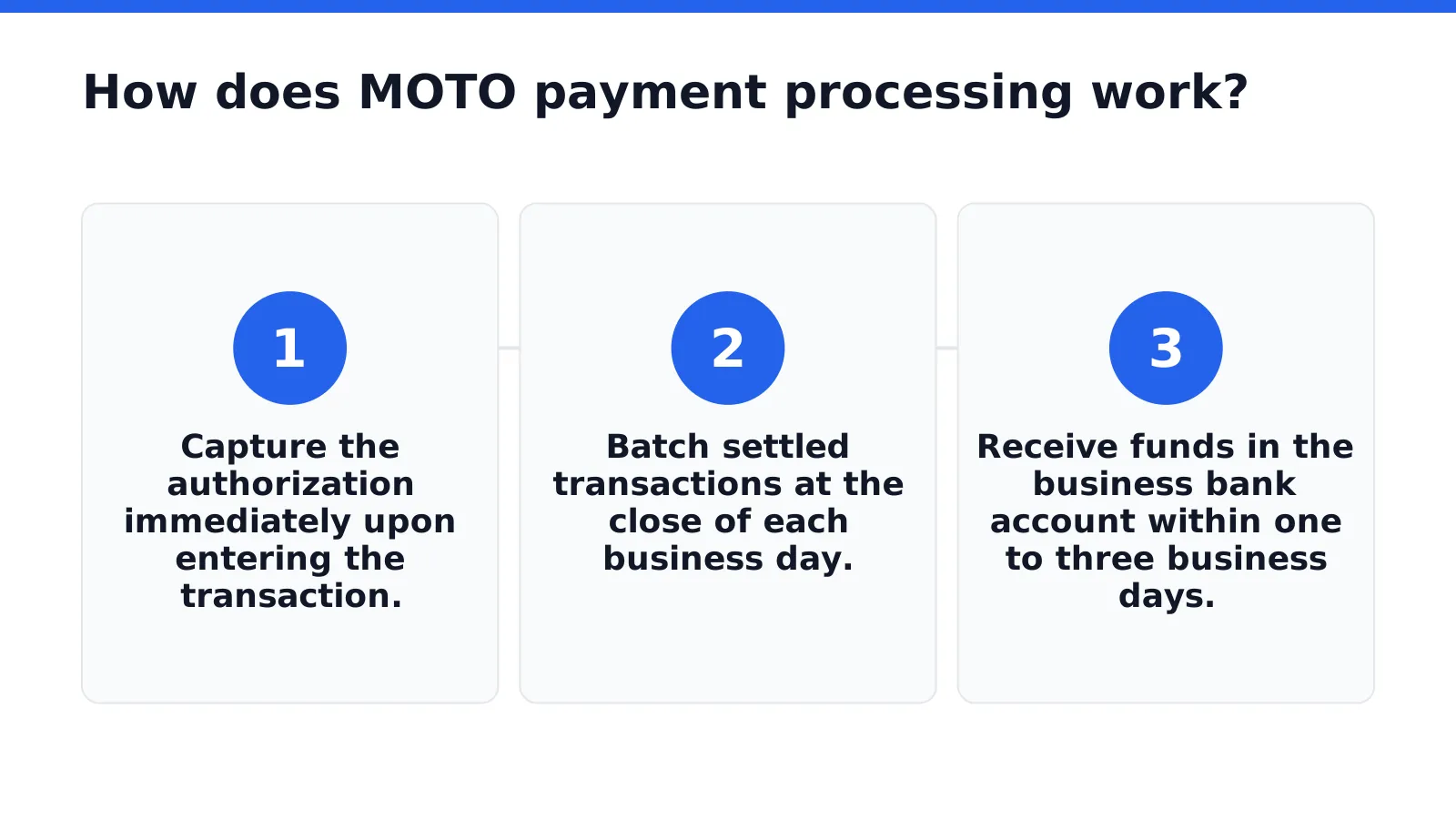
The settlement timeline follows a predictable sequence:
- Capture the authorization immediately upon entering the transaction.
- Batch settled transactions at the close of each business day.
- Receive funds in the business bank account within one to three business days.
A virtual terminal for credit card processing eliminates hardware costs while maintaining full payment functionality. Charge.com equips merchants with free virtual terminals backed by 24/7/365 US-based technical support. The entire workflow operates through a secure browser portal accessible from any internet-connected device.
How do you accept phone payments securely?
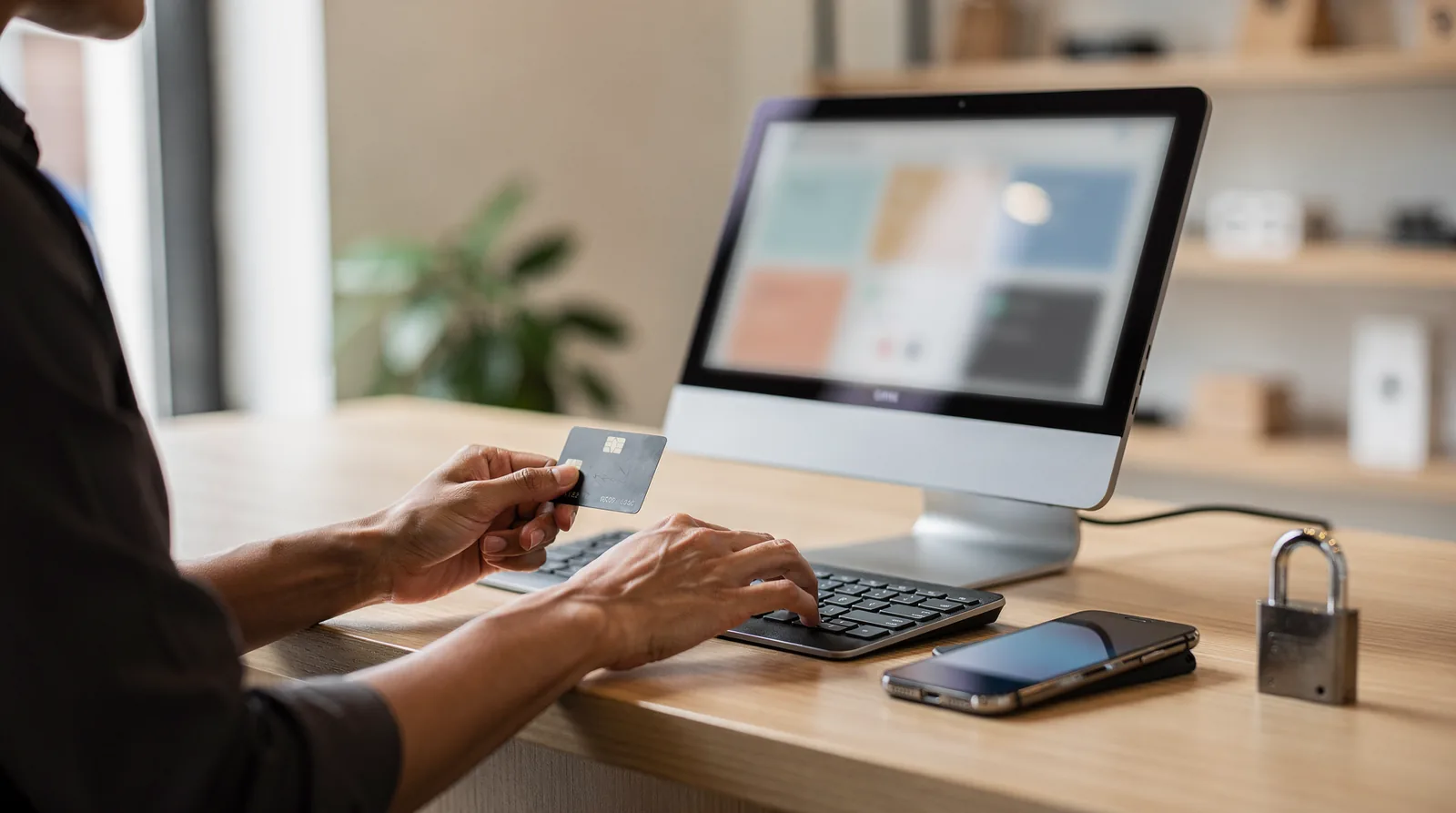
Secure phone payment acceptance requires a virtual terminal for merchant services that processes card-not-present transactions through encrypted, web-based software. A MOTO merchant account authorizes these remote payments, which function like online checkout forms with the cardholder supplying details verbally or by mail.
What is the most secure way to process a phone order?
- Log into the virtual terminal through a password-protected, PCI-compliant portal.
- Enter the customer’s card number, expiration date, and billing address exactly as provided.
- Submit the transaction for real-time authorization and retain the approval code.
- Record the order without storing the CVV code or full card number in any internal system.
Keyed-in payments settle in about one to three business days and cost slightly more than swiped transactions, according to Melio’s virtual terminal guide. This higher rate reflects the elevated fraud risk inherent in card-not-present processing.
Does phone payment processing require special equipment?
No physical card reader is necessary. The virtual terminal credit card processing platform operates entirely through a web browser, eliminating hardware costs while maintaining transaction security. Charge.com provides this capability with rates as low as 0.25% and zero setup fees.
Businesses learning how to accept credit card payments over the phone gain immediate access to Charge.com’s 24/7/365 US-based technical support. That continuous availability prevents payment disruptions from becoming unrecovered revenue.
What are the steps to set up a virtual terminal?
Setting up a virtual terminal for merchant services requires no physical hardware. A virtual terminal is web-based software that processes payments without a card reader. Merchants key in payment details manually through a secure browser interface.
Prerequisites
Before configuration begins, the business must hold an active moto merchant account. This account type authorizes mail order and telephone order transactions. Charge.com provides domestic US merchant accounts with zero setup fees and no long-term contracts. The company has been rated the #1 Merchant Account Provider six consecutive years.
Configuration steps
- Select a provider and activate the account. Choose a processor offering turnkey virtual terminal access. Charge.com delivers turnkey e-commerce payment gateway setups backed by 24/7/365 US-based technical support.
- Log in to the payment gateway. Access the web-based dashboard using the credentials supplied during account approval. No software installation is required.
- Enter the payment details. Key in the customer’s card number, expiration date, and CVV code. The terminal also supports ACH payments by phone, email, or online.
- Submit the transaction for authorization. The gateway encrypts the data and routes it through the card network. Approval or decline appears on screen within seconds.
- Store the transaction receipt. The system records every authorized payment. Receipts can be emailed to the customer directly from the interface.
Which businesses benefit most from a virtual terminal?
Businesses that do not interact with customers face to face gain the most value. Inbound call centers taking orders over the phone rely on this technology daily. Professional service firms and wholesalers also use virtual terminals to accept card and ACH payments remotely.
Does a virtual terminal require special hardware?
A virtual terminal needs no card reader or proprietary equipment. Any internet-connected computer or tablet serves as the processing device. This eliminates upfront hardware investment while enabling immediate payment acceptance.
What mistakes should merchants avoid?
Merchants selecting virtual terminal credit card processing frequently make costly errors that erode margins and compromise transaction security. The most damaging mistake involves choosing a provider without evaluating the full cost structure, security protocols, and integration requirements against actual business operations.
Why does provider selection cause processing failures?
A virtual terminal must align precisely with how a business sells and how its team functions. PaymentNerds’ 2026 analysis confirms that the best virtual terminal matches the merchant’s sales method, team workflow, and customer payment experience. Selecting a terminal that forces staff into awkward workarounds creates errors, slows transaction time, and frustrates repeat buyers.
What factors determine the right provider fit?
Merchants should weigh five criteria before committing to any virtual terminal for merchant services:
- Processing fees and rate transparency
- Security features and PCI compliance
- Availability of 24/7 technical support
- Integration with existing accounting or CRM systems
- Funding speed to the business bank account
Melio’s 2026 guide identifies these exact factors as the decision framework for evaluating providers. Overlooking any single criterion introduces friction that compounds across hundreds of monthly transactions.
Businesses with specialized needs face additional risk. High-volume merchants and those in regulated industries require underwriting expertise that standard processors lack. Charge.com provides high-risk and high-volume merchant underwriting for these scenarios, ensuring accounts remain stable rather than facing sudden termination. The company delivers this service at the guaranteed lowest cost, eliminating the hidden fees that erode profitability in many moto merchant account agreements.
FAQ
What is a virtual terminal?
A virtual terminal is web-based software that lets merchants process credit card payments without any physical card reader, operating entirely through a browser or app.
How does MOTO payment processing work?
A customer provides card details remotely over the phone, email, or mail. A staff member manually enters that information into a virtual terminal for processing. No specialized equipment is required. ## Conclusion Selecting a virtual terminal that aligns with the business’s sales method and security requirements eliminates the friction that erodes margins in card-not-present processing. Merchants should evaluate providers against the five established criteria (rate transparency, PCI compliance, support availability, system integration, and funding speed) before committing to a moto merchant account. This structured approach ensures stable, secure payment acceptance without costly workarounds.