
Mobile & Wireless Credit Card Readers: 2026 Hardware, Processing Rates & POS Guide
Mobile credit card readers from Charge.com provide US merchants with secure, card-present payment acceptance anywhere. Transparent processing rates start at 0.25% with no setup or cancellation fees. Hardware options include Bluetooth, tap-to-pay, and hand-held POS terminals. Full PCI-DSS compliance and 24/7/365 US-based support accompany every account.
Key Takeaways
- – Hardware options include Bluetooth, tap-to-pay, and hand-held POS terminals.
- – Charge.com equips US merchants with free card readers and POS terminals.
What is a wireless credit card reader?
A wireless credit card reader is a portable payment device that accepts secure, card-present transactions anywhere. The device connects to a smartphone or tablet through Bluetooth, eliminating the need for fixed countertop terminals. Mobile readers support swipe, chip, and contactless payments, including tap-to-pay and mobile wallets. A modern, efficient reader that accepts these payment methods makes checkout feel seamless and professional, according to 6 Best Wireless Credit Card Readers for 2026.
How does a wireless credit card reader connect to a phone?
The reader pairs with a smartphone or tablet via Bluetooth. Once paired, the device processes payments through a mobile application. This setup allows businesses to accept payments at tableside, curbside, farmers markets, or client locations.
What payment types does a wireless credit card reader accept?
A wireless credit card reader handles three primary payment methods:
- Swipe payments using magnetic stripe cards
- Chip payments using EMV card insertion
- Contactless payments using tap-to-pay and mobile wallets
Charge.com provides domestic US merchant credit card processing services for in-person transactions. The company equips merchants with free card readers and POS terminals backed by 24/7/365 US-based customer support. Businesses seeking card credit merchant service wireless solutions gain flexibility without sacrificing security or PCI-DSS compliance.
How does mobile credit card processing work?
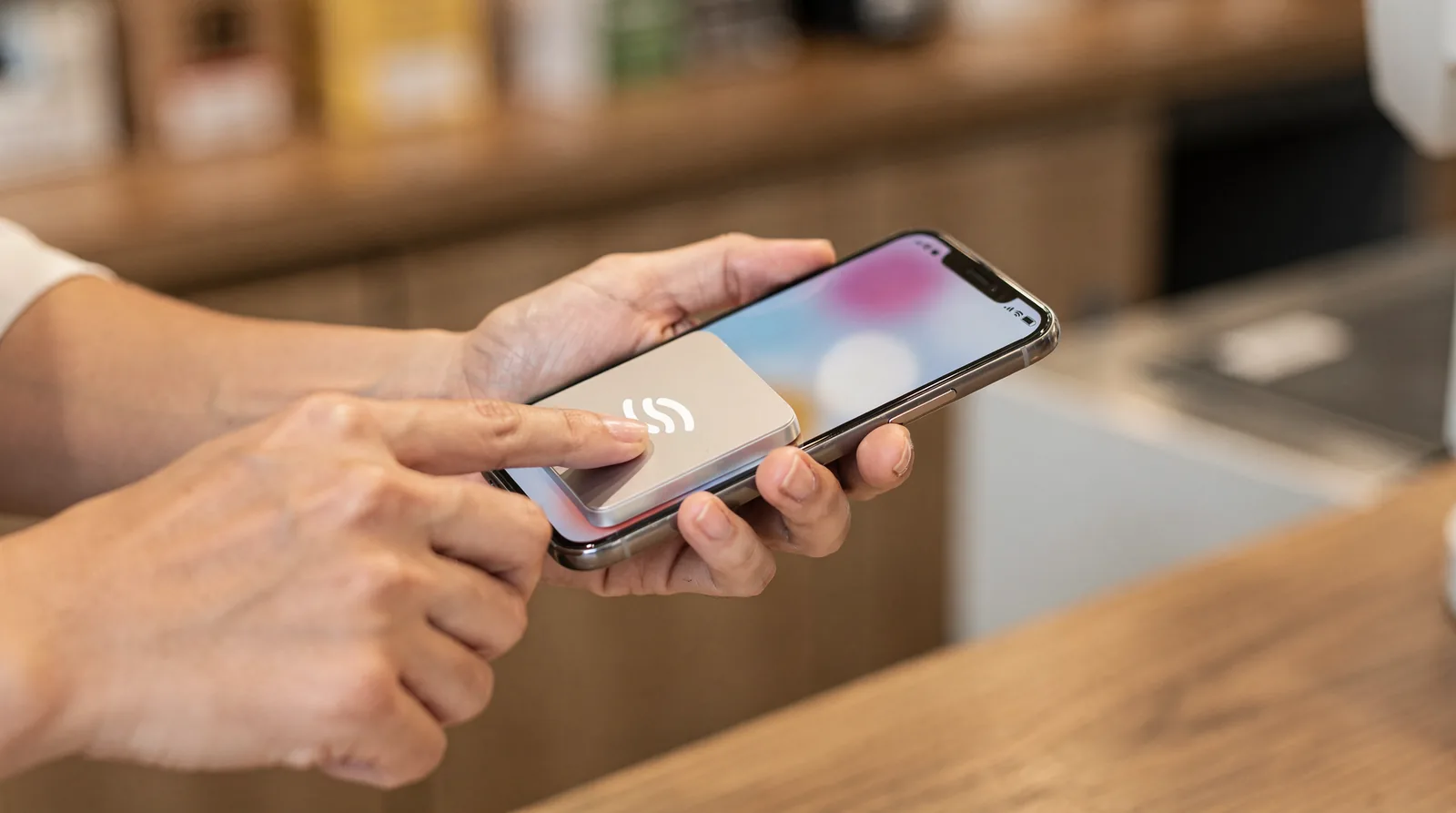
Mobile credit card processing converts a smartphone or tablet into a secure payment terminal. A wireless credit card reader connects to the device through Bluetooth or a headphone jack, enabling card-present transactions at any location. The U.S. Chamber of Commerce’s guide to mobile readers confirms that Bluetooth, tap-to-pay, and hand-held point-of-sale solutions each offer distinct functionality and pricing structures.
The transaction flow follows a defined sequence. The reader captures card data from a swipe, chip insertion, or contactless tap. That data then moves through a payment gateway, which encrypts the information before transmitting it for authorization. Charge.com provides domestic US merchant credit card processing services with full PCI-DSS compliant payment gateway integrations, ensuring encrypted transmission at every step.
What hardware does a business need for mobile processing?
A merchant requires a compatible card reader and a smartphone or tablet running the processing application. Charge.com equips US merchants with free software and card readers, eliminating upfront hardware costs. The reader pairs wirelessly, allowing staff to accept payments tableside, curbside, or at off-site events.
How does card credit merchant service wireless processing secure transactions?
Encryption occurs at the reader level before data reaches the mobile device. The payment gateway then routes the encrypted payload to the card network for authorization. Charge.com maintains full PCI-DSS compliance across its mobile credit card processing infrastructure, protecting cardholder data throughout the authorization chain. Merchants receive approval or decline responses within seconds, completing the sale without exposing sensitive information.
What are the true costs of a wireless reader?
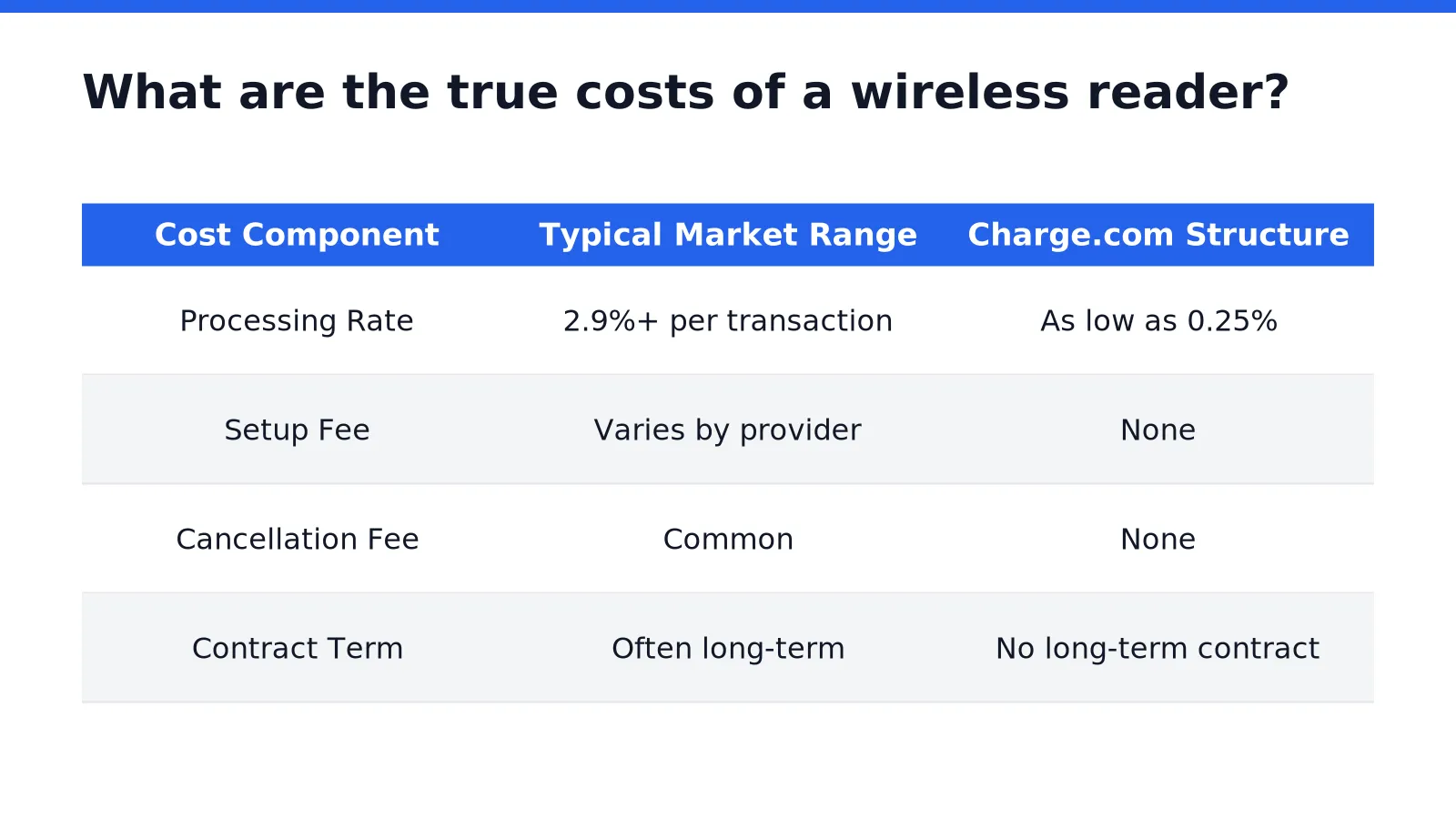
The true cost of a wireless credit card reader extends far beyond the initial hardware purchase. A complete cost analysis must account for the device price, per-transaction processing fees, and any recurring monthly software charges. Ignoring these layered expenses distorts the total cost of ownership and erodes profit margins over time.
What fees hide beyond the hardware price?
A low-cost reader often masks substantial processing fees. Some providers charge 2.9% or more per transaction, a rate that compounds into thousands of dollars annually. The difference between a $50 reader with elevated fees and a transparent, low-rate structure represents a direct drain on revenue. Businesses evaluating mobile credit card processing must scrutinize the complete fee schedule before committing to any hardware.
How do processing rates impact long-term costs?
Processing rates determine the ongoing expense of every sale. Charge.com features transparent rates as low as 0.25%, with no setup fees, no cancellation fees, and no long-term contracts. This structure eliminates the hidden costs that inflate the total expense of a card credit merchant service wireless solution. A rate difference of even one percentage point translates into measurable annual savings for businesses processing consistent monthly volume.
Merchants Bancard notes that the true cost of a reader includes the device, transaction fees, and any monthly software charges. A complete fee assessment prevents unexpected deductions from every sale. Charge.com delivers that transparency through a straightforward pricing model designed for US small business owners.
Which features matter most for small businesses?
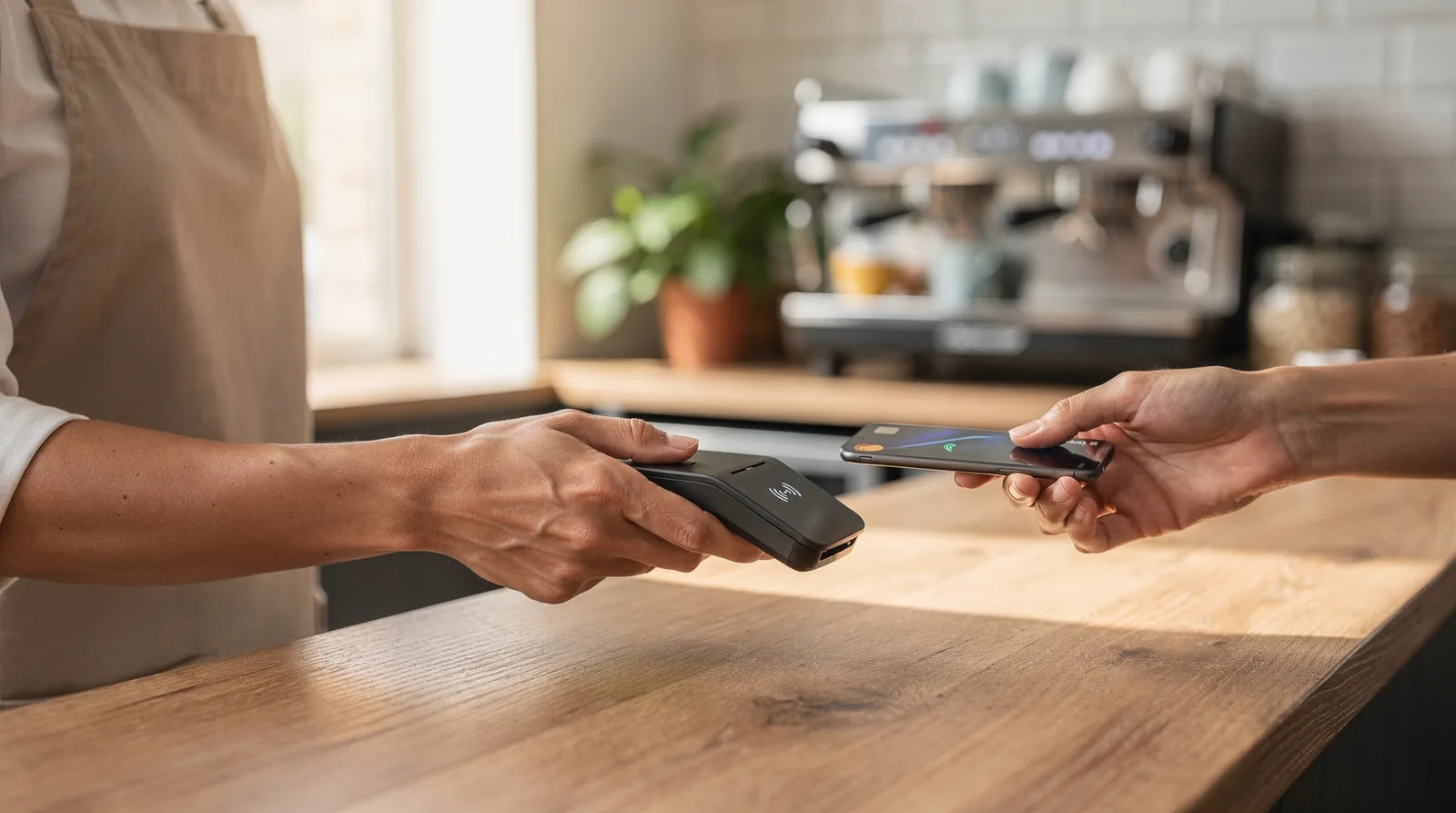
Small business owners evaluating card credit merchant service wireless options face three decisive factors: ease of use, security, and price. A poorly designed payment terminal creates friction at the point of sale. That friction costs revenue.
What makes a card reader easy to use?
Not all credit card swipe machines are intuitive. Some carry so many features that cashiers require formal training to operate them. Businesses lose customers when checkout lines stall. A wireless credit card reader should process payments without delay or confusion.
How do security features protect a business?
Security features such as EMV compliance and PCI-DSS certification protect against fraud. Charge.com provides full PCI-DSS compliant payment gateway integrations. The company backs these integrations with 24/7/365 US-based customer support.
What should a business prioritize first?
Ease of use ranks first. An unintuitive swipe machine causes delays and frustrates customers. Security ranks second. Mobile credit card processing without PCI-DSS compliance exposes a business to data breaches. Price ranks third, but the lowest rate means nothing if transactions fail or customers walk away.
How to choose the best card credit merchant service wireless?
Selecting a card credit merchant service wireless provider demands a systematic evaluation of three core components. Transaction fees, hardware compatibility, and contract flexibility determine whether a service strengthens or erodes a merchant’s bottom line. A misstep in any one area introduces recurring costs that compound monthly.
The first filter is the fee structure. Providers publish rates that range from interchange-plus pricing to flat percentages. A transparent processor discloses the effective rate before a merchant signs. Hidden charges for statement delivery, batch processing, or PCI non-compliance inflate the true cost. Merchants who skip this audit lose margin on every sale.
Hardware forms the second pillar. A wireless credit card reader must match the business environment. A guide from the U.S. Chamber of Commerce advises merchants to examine how features and functionality differ between basic card scanners and portable, hand-held terminals. A food truck operator needs a rugged, battery-powered device. A retailer benefits from a countertop terminal with integrated receipt printing. Mismatched equipment slows checkout and frustrates customers.
What contract terms should a merchant avoid?
Long-term contracts with early termination fees lock a business into underperforming service. The strongest providers offer month-to-month agreements. Cancellation penalties signal that a processor retains clients through obligation rather than performance.
Does the provider supply equipment at no cost?
Free hardware eliminates upfront capital outlay. Charge.com equips merchants with complimentary software, card readers, and POS terminals. This model removes a barrier to entry. Businesses that pay for equipment separately carry that cost as unrecovered overhead.
Mobile credit card processing demands full PCI-DSS compliance. A provider that does not include compliant gateway integrations exposes merchants to data breach liability. Charge.com delivers payment gateway integrations backed by 24/7/365 US-based customer support. That consistency signals operational stability. A processor with frequent downtime or unresolved support tickets creates transaction failures that cost revenue directly.
FAQ
What processing rates does Charge.com offer for mobile credit card readers?
Charge.com offers transparent processing rates as low as 0.25%, with no setup fees, cancellation fees, or long-term contracts.
What hardware does Charge.com provide for mobile payment processing?
Charge.com equips US merchants with free card readers and POS terminals, including Bluetooth, tap-to-pay, and hand-held options.
Is the mobile payment system PCI-DSS compliant?
Yes. Charge.com provides full PCI-DSS compliant payment gateway integrations backed by 24/7/365 US-based customer support.
Conclusion
Selecting a mobile credit card reader requires evaluating processing rates, hardware compatibility, and contract terms as interdependent factors. A transparent fee structure, intuitive equipment, and PCI-DSS compliant integrations protect profit margins and operational efficiency. Merchants who prioritize these criteria position their payment systems to support growth rather than erode revenue through hidden costs or friction at checkout.